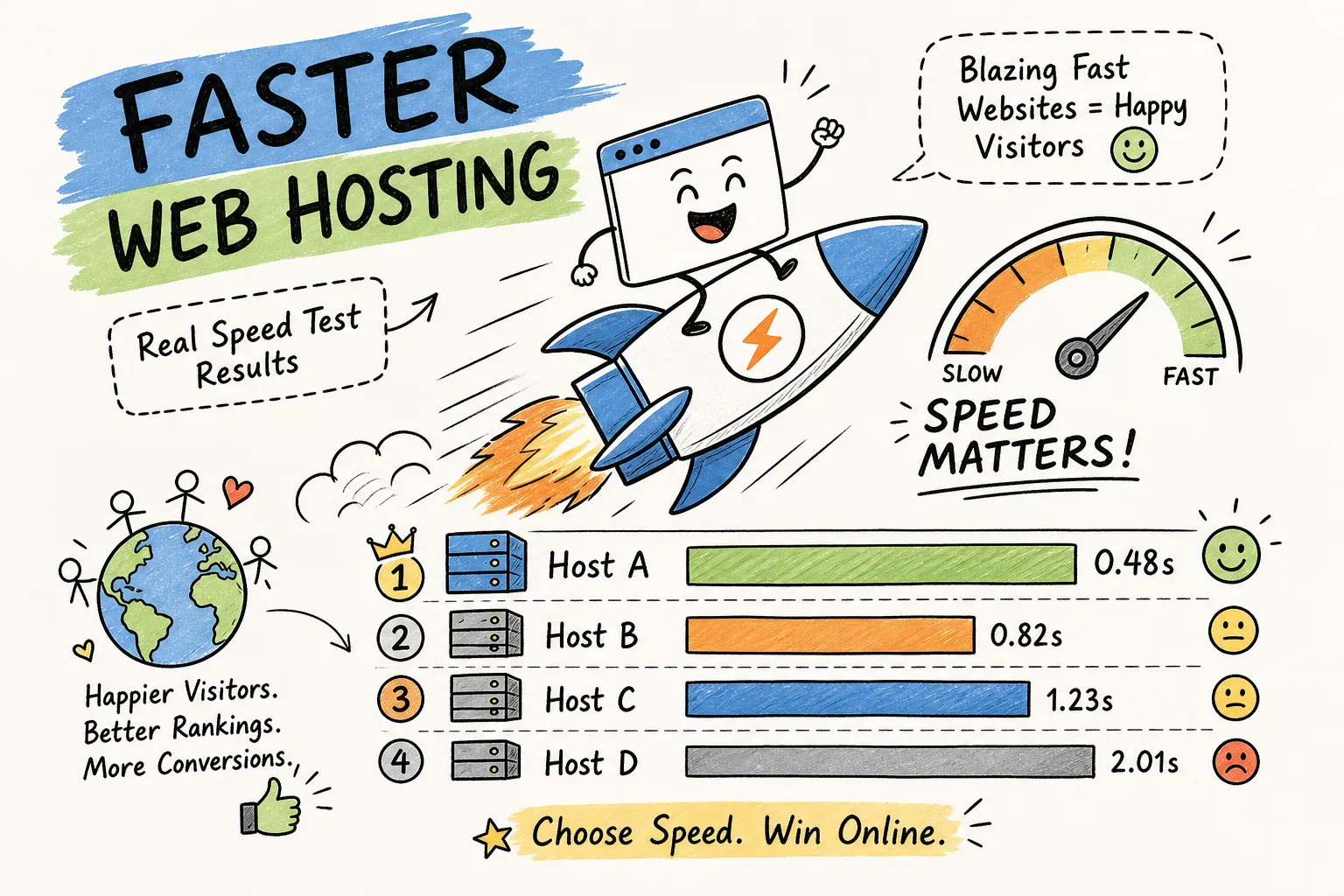
Cheap web hosting has a reputation it no longer deserves. For years, going budget meant accepting sluggish load times, patchy uptime, and support tickets that went nowhere. That picture has changed significantly heading into 2026, and the independent benchmark data is catching up with that shift.
At Hosting Offer Today, we track hosting performance year-round, comparing speed tests, uptime logs, and pricing shifts across dozens of providers. What we’ve found is that several affordable hosts now deliver load times and reliability that would have been considered mid-tier just two years ago. LiteSpeed servers, NVMe SSD storage, and genuine uptime guarantees have filtered down to plans under $5 per month.
This guide covers what the real benchmark numbers look like for today’s top budget providers, which features you should refuse to go without even at low prices, and how to sidestep the renewal price trap that catches most first-time buyers off guard. By the end, you’ll know exactly which inexpensive hosting plan fits your site type and how to pay even less for it.
Why the performance gap between cheap and premium hosting is closing
The biggest reason cheap web hosting got faster isn’t magic: it’s hardware. LiteSpeed web servers and NVMe SSD storage, once reserved for managed or VPS-tier plans, are now showing up as standard inclusions on entry-level shared hosting. These two upgrades alone cut response times dramatically compared to traditional Apache and HDD setups. In recent years, many budget providers have rolled out these improvements, and the 2026 benchmark results reflect that change clearly.
The competitive price range has also shifted. You’re no longer choosing between a $1/month plan with outdated performance or a $20/month plan that actually works. Many entry-level shared hosting options now land between $1.40 and $4/month and include free SSL, SSD storage, and a legitimate uptime guarantee. The introductory pricing at that tier is genuinely affordable, though the renewal story, covered in detail below, deserves close attention before you commit to any provider. If you want a focused list of ultra-cheap options tested for 2026, see our roundup of 7 Best Cheap Web Hosting Under $3 in 2026 (Tested & Reviewed).
Cheap web hosting speed and uptime: what the 2026 benchmarks actually show
Based on independent testing results published for 2026, Hostinger posts the strongest performance numbers in the budget category. Its global average TTFB came in at 223ms, and uptime monitoring consistently shows 99.99% availability. One testing period recorded 100% uptime over the monitored window with a full page load time of 0.607 seconds. For a plan that starts under $3/month, those numbers compete directly with hosts charging three to four times as much. For a direct comparison of the two market leaders, see our detailed Hostinger vs Namecheap 2026: Speed, Price, and Which to Pick.
The remaining contenders show a range of trade-offs worth understanding before you choose:
- DreamHost: TTFB of 481, 495ms across independent tests, uptime 99.96, 99.97%, acceptable, but noticeably slower than Hostinger.
- InterServer: 99.99% uptime with a 462ms average TTFB, highly reliable, though not the fastest option.
- FastComet: ~496ms TTFB with 99.97, 99.98% uptime, performance broadly comparable to DreamHost.
- ScalaHosting: 99.92% uptime and TTFB of 442, 494ms depending on the test, lags on both fronts.
Uptime above 99.95% is the practical floor for any site you want visitors to trust. Below that threshold, expected annual downtime climbs past four hours, a real cost for small business sites and blogs with steady readership. Any cheap web host that can’t consistently clear that bar on independent monitoring shouldn’t make your shortlist, regardless of price.
Features worth demanding from any cheap web hosting plan
Not all budget web hosts are built the same. A few specific features separate the serious providers from the ones cutting corners to hit a low price point. LiteSpeed web server support directly affects how fast your pages serve under load. NVMe SSD storage speeds up database reads, which matters especially for WordPress sites running multiple plugins. Free SSL certificates are now table stakes for any reputable plan.
Daily backups and free migration support indicate a host has operational maturity beyond just selling introductory deals. These aren’t premium add-ons, they’re baseline expectations you should hold even when evaluating cheap shared hosting options.
HoboHost stands out as one of the most feature-complete budget options available. Its entry-level plans start around $1.40/month and include cPanel, LiteSpeed, true NVMe SSD storage, free SSL, and free cPanel migrations. Asura Hosting comes in even lower at around $1/month with a similar feature stack: LiteSpeed, NVMe, free SSL, free migrations, and JetBackup-powered daily backups. Both are less prominent in many mainstream hosting roundups, which is exactly why they’re worth knowing about when you’re optimizing for features per dollar.
Hostinger also checks most of these boxes at the $2.99/month introductory tier, with LiteSpeed and NVMe advertised across its shared plans. For readers who want a provider with more name recognition and a longer track record, Hostinger is the cleaner choice. For readers optimizing purely on features per dollar, HoboHost and Asura Hosting are worth a close look. For additional context on Hostinger’s pricing and plan structure, see this Hostinger pricing review.
The renewal price trap most budget hosting guides skip
The most common mistake first-time hosting buyers make is signing up based on the headline introductory rate without checking what the plan costs at renewal. Namecheap’s Stellar plan starts at $1.98/month on a one-year term but renews at $3.88/month, approximately $46.56/year, as of May 2026. That’s nearly double the intro rate. GoDaddy’s shared hosting follows a similar pattern, with the renewal cost climbing well above what the signup page advertises. For details on current shared hosting plans from Namecheap, check Namecheap’s shared hosting.
Hostinger’s base shared plan starts around $2.99/month but renews at $10.99/month, and DreamHost’s Launch plan follows the same pattern, jumping from $2.89/month to $10.99/month at renewal. Across the budget hosting category, renewal rates frequently run two to three times the advertised signup price, a pattern visible in both the Hostinger and DreamHost examples above, though it varies by provider and term length. The only reliable way to delay the renewal jump is prepaying for a longer term upfront, usually two or three years, which locks in the lower rate but requires a larger commitment. For a general primer on how hosting costs add up and what to expect, see Hostinger’s guide on how much website hosting costs.
Your refund window matters as much as the renewal rate. DreamHost offers the most generous policy in this segment: a 97-day money-back guarantee on shared hosting. InMotion Hosting runs 90 days. Namecheap and most other budget providers operate on a 30-day window, with dedicated servers and add-ons often excluded from refunds entirely. Separate add-on renewals for SSL certificates, domain privacy, and site security tools are another place costs accumulate unexpectedly. Read the full renewal breakdown, not just the hosting plan line item, before you sign up.
Matching the right budget host to your website type
For a content-driven blog or personal portfolio, TTFB is the metric that most directly affects how readers experience your site on first load. Hostinger’s 223ms global average makes it the clearest choice here. Storage limits matter less for new sites but become a real consideration once you’re uploading frequent images or video thumbnails. Look for plans that offer unmetered bandwidth or at least 50GB of SSD storage so you don’t hit a wall in year two as your content library grows.
A small business site going down during business hours is a serious problem, not just an inconvenience. For these use cases, prioritize hosts with documented uptime at or above 99.99%, a stricter target than the 99.95% baseline floor, justified by the direct revenue and credibility impact of even brief outages for a business site. Support channels with live chat and reasonable response times are equally important. WordPress-specific sites benefit most from the LiteSpeed plus NVMe combination, since WordPress’s database queries respond fastest on that infrastructure stack. DreamHost’s longer money-back guarantee also makes it a lower-risk trial option for small business owners who want time to evaluate performance before fully committing.
If you’re a freelance web developer managing multiple client sites, the economics shift toward hosts with easy account management, reseller-friendly features, and migration tools. Free cPanel migrations, like those offered by HoboHost, reduce the time cost of moving clients between hosts significantly. For guidance on moving a WordPress site without downtime, see this practical guide on how to move WordPress to a new host without downtime. The feature-per-dollar calculation matters more at scale than it does for a single personal site.
How verified coupons unlock mid-tier hosts at genuinely low prices
Choosing the absolute cheapest raw plan from an unfamiliar provider is often the wrong trade-off. A smarter strategy is targeting a host with proven performance data, like Hostinger or Namecheap, and applying a verified discount coupon to bring the first-term price down to or below what the no-name budget options charge. The result is near-premium performance at genuine budget pricing, without the risk of signing up with a provider that can’t hold 99.95% uptime or offers no meaningful support structure. For an overview of top-performing services across tiers, consult our 10 Best Web Hosting Services of 2026: Performance Tested & Reviewed.
Hosting Offer Today maintains a curated list of verified discount codes for the top budget and mid-tier hosting providers, updated regularly with current 2026 pricing and active promotion windows. The deals listed are cross-referenced against each provider’s current pricing page before publication. Before you sign up with any hosting provider, checking for an active coupon at Hosting Offer Today takes less than two minutes, and on some of the stronger-performing plans in this guide, those coupons can make a meaningful difference in what you actually pay in year one.
The combination of a well-benchmarked host and a current verified coupon is consistently the best value play in this category. You get real uptime data, proven TTFB numbers, and an introductory price that competes with the cheapest raw alternatives, without betting your site’s performance on an untested provider.
The bottom line on cheap web hosting in 2026
Finding cheap web hosting that actually performs well in 2026 is a realistic goal, not a compromise. Hostinger’s 223ms TTFB and 99.99% uptime make a strong case that budget and performance are no longer opposites. DreamHost, InterServer, and FastComet hold their own at slightly higher response times. The variables that actually determine your experience are the features included in the plan (LiteSpeed, NVMe SSD, daily backups), the renewal pricing you’ll face after year one, and whether the host has independent data backing its uptime claims.
Before you click purchase, match your site type to the right cheap web hosting provider using the benchmarks covered here, verify the renewal rate not just the signup price, and confirm what refund window you have if performance doesn’t hold up. Then check for a current verified deal at Hosting Offer Today. The savings are real, and the 2026 benchmark data confirms the performance to back them up.